Introduction
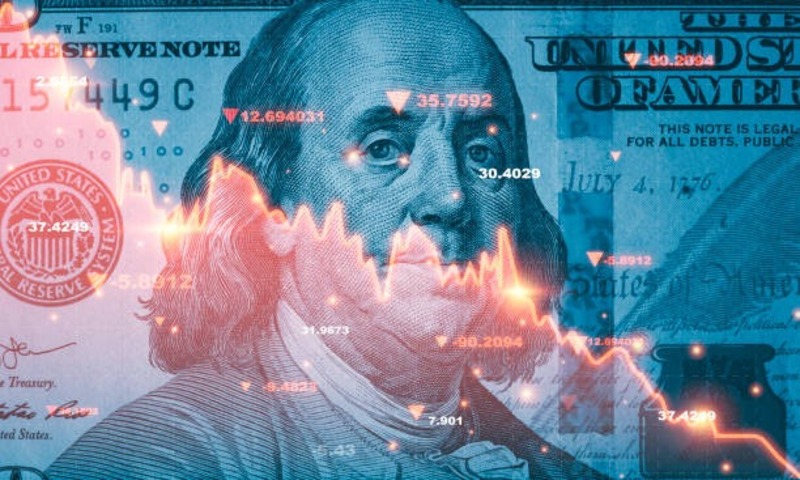
The United States Dollar Index recorded another strong performance this week as investors sought safety in response to rising uncertainty across global markets. Persistent geopolitical risks, volatile equity movements, and mixed economic signals have driven renewed demand for the dollar as the world’s most reliable store of value. The index’s climb highlights how quickly sentiment can shift toward defensive positioning when confidence in global growth falters.
For traders and analysts, the move confirms the dollar’s enduring appeal during episodes of volatility. Whenever financial stress or political instability increases, capital tends to move toward dollar-based assets, which are viewed as liquid, transparent, and secure. This latest rally suggests that investors are preparing for a prolonged phase of cautious sentiment rather than a brief flight to safety.
Investor Retreat and the Safe Haven Trade
Market participants have been steadily reducing exposure to riskier assets such as emerging market bonds, technology equities, and high-yield credit. In their place, demand for government securities and dollar holdings has intensified. The strength of the United States economy relative to its peers and the depth of its capital markets continue to make dollar assets a natural refuge when risk appetite fades.
Investors are not only seeking safety but also predictability. The Federal Reserve’s clear communication and measured pace of policy adjustment have strengthened confidence in dollar liquidity. By contrast, uncertainty in other major economies, particularly in Europe and parts of Asia, has encouraged investors to rebalance their portfolios toward United States instruments. This repositioning has lifted the dollar index to its highest level in several weeks, reinforcing its dominance as a global benchmark for value and trust.
Macroeconomic Drivers Behind the Dollar’s Strength
Economic fundamentals in the United States have remained resilient despite higher interest rates and inflation pressures. Job growth has slowed but remains steady, and consumer spending has held up better than expected. These conditions give the dollar a structural advantage over currencies tied to weaker or slower-growing economies. Even moderate growth in the United States can attract foreign capital when global confidence is low.
The interest rate environment is also supporting the currency. Many central banks in advanced economies have paused or begun to consider rate cuts, while the Federal Reserve continues to signal caution. This divergence maintains a favorable yield gap for dollar assets, attracting fixed-income investors seeking better returns. The resulting inflows not only lift the dollar’s value but also stabilize Treasury markets at a time when global volatility is increasing.
Impact on Global Currencies and Markets
The strengthening dollar has placed renewed pressure on several major currencies. The euro and the yen have both weakened, while some emerging market currencies have experienced sharper losses. These movements reflect the reality that when the dollar rises, the cost of borrowing and debt servicing in foreign currency also increases. For countries with significant external liabilities, this creates tighter financial conditions and complicates economic management.
Commodity-linked currencies have also softened as global investors retreat from cyclical exposures. With oil and metal prices fluctuating, currencies tied to export performance have become more sensitive to capital flow shifts. In Asia and Latin America, central banks have begun to intervene selectively to contain volatility and prevent abrupt currency swings. These defensive measures highlight the far-reaching effects of dollar strength across global financial systems.
Market Sentiment and Tactical Positioning
From a market perspective, positioning data shows a steady buildup of long dollar exposure among institutional investors. Hedge funds and asset managers have reduced holdings in risk-sensitive assets, signaling a shift toward defensive portfolios. The dollar’s momentum is therefore being reinforced by both sentiment and structural allocation flows, rather than by speculative short-term trades.
However, this concentration of positions introduces its own risks. If global conditions stabilize or if United States data begin to weaken significantly, some of these dollar positions could unwind quickly. The result would be short-term volatility in both currency and bond markets. For now, though, risk aversion continues to dominate trading behavior, suggesting that the demand for safety will remain a defining theme in the near term.
Economic Risks and Outlook
While the dollar’s rally appears well-supported, several factors could limit its duration. If inflation in the United States moderates more quickly than anticipated, the Federal Reserve may accelerate its rate normalization process, reducing the yield advantage that has supported the currency. Additionally, any signs of a synchronized global recovery could shift investor preferences toward higher-risk assets, easing upward pressure on the dollar.
Still, the broader environment remains favorable to dollar strength. The persistence of geopolitical uncertainty, coupled with diverging monetary policies, is likely to sustain cautious sentiment. Even if short-term corrections occur, the underlying demand for liquidity and stability suggests that the dollar will remain at the center of global financial flows for some time to come.
Conclusion
The recent gains in the United States Dollar Index underscore how swiftly investor behavior can shift when risk aversion takes hold. In times of uncertainty, the dollar’s combination of depth, safety, and liquidity continues to make it the asset of choice for global markets. While the rally may moderate as conditions evolve, the broader trend reinforces the currency’s role as both a barometer of confidence and a cornerstone of the global financial system.
As markets navigate another phase of volatility, the dollar’s performance will remain one of the clearest indicators of how investors perceive global risk. For now, the message is clear: stability is in demand, and the dollar remains its most reliable expression.