Introduction
The BRICS nations Brazil, Russia, India, China, and South Africa are intensifying discussions on creating a unified currency as part of broader efforts to reduce reliance on the U.S. dollar in international trade. This initiative is driven by a desire to strengthen economic sovereignty, reduce vulnerability to external monetary policy shocks, and facilitate smoother trade settlements among member countries. While proponents argue that a BRICS currency could provide a stable alternative to the dollar and foster regional economic integration, critics caution that significant economic disparities and differing monetary policies among the members present substantial challenges. The debate has drawn global attention as it reflects a growing trend among emerging economies to explore mechanisms for reducing dependence on the dollar-dominated global financial system.
In addition to trade considerations, the push for a BRICS currency is motivated by geopolitical developments. Rising tensions between the United States and several BRICS nations have increased the urgency of establishing alternatives to dollar-denominated transactions. Sanctions, tariffs, and the broader global influence of the dollar have prompted emerging economies to consider diversifying reserve holdings and enhancing financial autonomy. Analysts note that a unified currency, if successfully implemented, could alter cross-border trade dynamics, influence currency markets, and potentially impact dollar liquidity in global financial markets.
BRICS’ Push for a Unified Currency
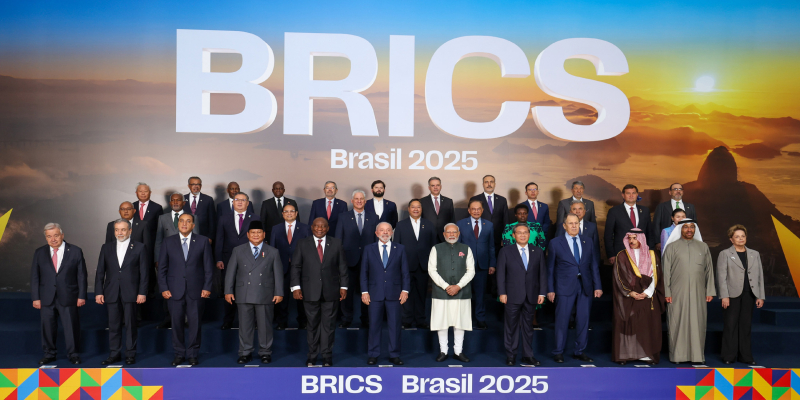
At the 2024 BRICS summit in Johannesburg, Brazilian President Luiz Inácio Lula da Silva emphasized the need for a common currency to facilitate intra-bloc trade and strengthen economic ties among member nations. He argued that a shared currency could reduce transaction costs, minimize exposure to exchange rate fluctuations, and improve payment efficiency. The proposal has generated enthusiasm among countries like Russia and China, which see potential benefits in expanding the use of non-dollar currencies for trade settlements and reserves.
However, other BRICS members, including India and South Africa, have expressed caution. Concerns include the feasibility of coordinating monetary policy across diverse economies, potential political disagreements, and the need for a robust institutional framework to manage the currency. Economists point out that aligning interest rates, inflation targets, and fiscal policies across countries with varying economic cycles would be complex. These challenges underscore that while the concept of a BRICS currency is appealing in theory, its practical implementation would require careful planning, compromise, and significant structural reforms.
Challenges to Implementation
Establishing a BRICS currency faces several obstacles. First, the economic disparities among member countries are substantial, with GDP per capita and inflation rates differing widely across the bloc. Second, existing monetary policies are not harmonized, making coordination of interest rates, currency supply, and fiscal discipline challenging. Third, the financial infrastructure across member states varies in sophistication, with some countries lacking the technological systems to support seamless cross-border transactions.
Geopolitical factors also complicate matters. Differences in foreign policy priorities, regional tensions, and divergent trade relationships with the United States and other major economies could hinder consensus. Moreover, the volatility of commodity-dependent economies, such as Brazil and Russia, could create instability if a unified currency were introduced prematurely. Analysts emphasize that careful planning, scenario analysis, and gradual implementation are essential to mitigate these risks.
Alternative Approaches to De-Dollarization:
Given the complexities of creating a new currency, BRICS nations are also exploring alternative strategies to reduce dependence on the U.S. dollar. These include promoting bilateral trade in local currencies, establishing cross-border payment systems that bypass the dollar, and creating joint investment platforms. Brazil has advocated for reforms to facilitate international settlements in local currencies, while China has expanded the use of the yuan in trade finance and reserves. Russia has similarly explored payment mechanisms in rubles and gold.
These alternative measures allow BRICS nations to decrease exposure to dollar volatility without the immediate risks associated with a new unified currency. Over time, these initiatives could strengthen financial independence, reduce reliance on the dollar, and create more resilient mechanisms for trade settlements. Financial analysts note that incremental progress in these areas may lay the groundwork for more ambitious currency integration in the future.
Geopolitical and Economic Implications:
The BRICS currency debate has significant geopolitical implications. A unified currency or expanded use of local currencies in trade could reduce U.S. influence over international finance and challenge the dollar’s dominance as the global reserve currency. This has prompted strong reactions from the United States, which has warned against actions that could undermine dollar hegemony. Such a shift could influence global capital flows, affect emerging market debt, and alter the dynamics of international trade and investment.
Economically, a BRICS currency or increased local currency use could reduce transaction costs for member countries, provide greater price stability in cross-border trade, and enhance economic cooperation. It could also serve as a counterbalance to the influence of Western-dominated financial institutions. Analysts caution, however, that the transition would likely be gradual, requiring years of coordination, regulatory alignment, and infrastructure development.
Outlook and Analyst Perspectives:
The outlook for a BRICS currency remains uncertain. While the political will to explore alternatives to the dollar is strong, practical implementation faces significant hurdles. Analysts predict that the bloc will continue to pursue incremental measures, such as promoting trade in local currencies and expanding cross-border payment networks, before attempting a full currency integration. Over time, these steps may pave the way for a more comprehensive solution that balances economic benefits with political feasibility.
Investors and policymakers are advised to monitor developments closely, as shifts in BRICS strategies could influence currency markets, trade flows, and investment allocations globally. A successful implementation of de-dollarization initiatives, even in part, could impact the relative strength of the U.S. dollar, affect commodity pricing, and create new opportunities for global trade diversification.
Conclusion:
The BRICS currency debate highlights the complexities of reducing reliance on the U.S. dollar in a globalized financial system. While the bloc is actively exploring options to enhance economic sovereignty and mitigate dollar exposure, challenges such as economic disparities, policy coordination, and geopolitical tensions remain substantial. The outcomes of these discussions will have significant implications for international trade, currency markets, and global financial stability. As BRICS nations continue to deliberate, incremental steps toward de-dollarization and financial integration are likely to shape the future dynamics of the global economy.