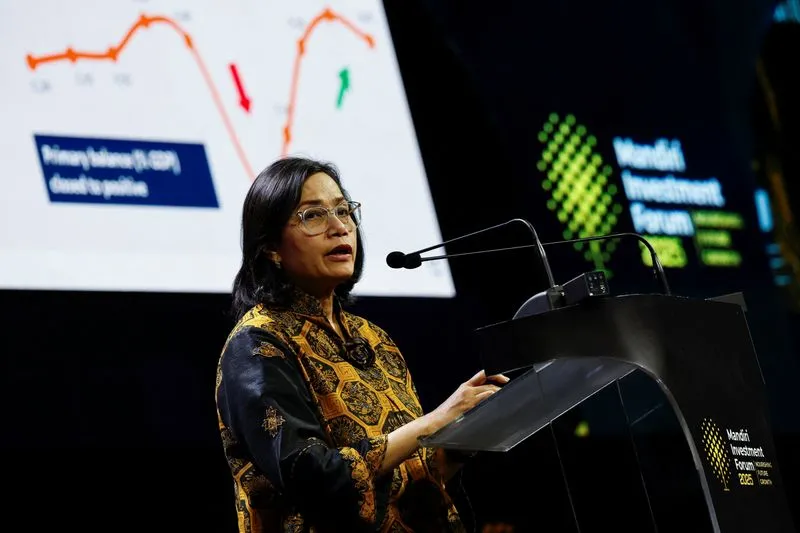
Finance Minister Addresses Market Speculation
Indonesia’s Finance Minister, Sri Mulyani Indrawati, has publicly clarified her stance on U.S. dollar deposit rates amid market speculation regarding government directives. Concerns arose after rumors circulated that Indonesia’s financial authorities might influence commercial banks’ USD-denominated deposits. Minister Indrawati emphasized that no government-imposed adjustments to deposit rates are planned and that the central bank maintains autonomy in monetary policy. The clarification aims to stabilize market sentiment, reassure investors, and prevent unnecessary volatility in the forex and banking sectors.
Background of the USD Deposit Debate
The discussion around USD deposit rates in Indonesia emerged as the U.S. dollar strengthened, pressuring emerging market currencies and influencing capital flows. A strong dollar can make USD-denominated deposits more attractive, potentially shifting funds away from local currency deposits. Analysts note that speculation regarding regulatory intervention created uncertainty, prompting market participants to demand clarity from government and central bank authorities. The Finance Minister’s statement serves to dispel ambiguity and maintain confidence in Indonesia’s financial system.
Role of Bank Indonesia
While the Finance Minister clarified the government’s position, Bank Indonesia retains primary responsibility for monetary policy and managing exchange rate stability. The central bank employs interest rate adjustments, liquidity injections, and foreign currency market interventions to manage capital flows and support the rupiah. Analysts highlight that Bank Indonesia’s autonomy ensures that market-driven mechanisms, rather than direct government directives, determine USD deposit rates and currency market behavior.
Impact on Domestic Financial Markets
The Finance Minister’s clarification has immediate implications for domestic financial markets. Following the announcement, volatility in USD deposits moderated, and market confidence improved. Analysts observed increased stability in interbank lending rates and smoother execution of foreign currency transactions. The statement also reassured commercial banks, allowing them to maintain operational plans without concern over sudden regulatory changes affecting USD deposit offerings.
Investor Sentiment and Capital Flows
Investor sentiment in Indonesia responded positively to the clarification. International investors, particularly those holding USD-denominated instruments, viewed the statement as a reaffirmation of market-driven interest rate policies. Analysts suggest that clear communication from government and central bank authorities is essential to maintaining predictable capital flows, reducing speculative behavior, and ensuring stability in both domestic and cross-border investments.
Implications for the Rupiah
USD deposit rates directly influence the attractiveness of holding U.S. dollars versus Indonesian rupiah. A shift toward USD deposits can increase demand for the currency, placing downward pressure on the rupiah. By clarifying the government’s position, Minister Indrawati reinforced the role of market forces and Bank Indonesia’s policies in determining exchange rate dynamics. Analysts emphasize that transparency in policy guidance is critical to mitigating currency volatility and maintaining macroeconomic stability.
Global Dollar Influence
The U.S. dollar’s strength, driven by resilient economic indicators and moderate inflation, has heightened the relevance of USD-denominated deposits in emerging markets. Capital flows respond to relative interest rate differentials, currency stability, and perceived risk. Analysts highlight that Indonesia’s proactive communication strategy helps mitigate the impact of external dollar strength, supporting stable financial conditions and reducing uncertainty for both domestic and international investors.
Sectoral and Commercial Bank Implications
The clarification has implications for various sectors, particularly commercial banks managing liquidity and deposit portfolios. Banks can now maintain USD deposit products without fear of sudden policy intervention, ensuring operational continuity. Analysts note that stable deposit rates facilitate lending, investment, and hedging strategies, contributing to overall financial system stability. The banking sector benefits from clear policy guidance, allowing efficient management of balance sheets, capital requirements, and foreign currency exposure.
Economic Outlook and Policy Coordination
Looking ahead, Indonesia’s financial authorities continue to monitor global and domestic economic conditions. The Finance Minister emphasized coordination between government fiscal policies and Bank Indonesia’s monetary policy to ensure macroeconomic stability. Analysts anticipate that careful oversight of currency markets, interest rate differentials, and capital flows will remain essential in navigating external pressures from the U.S. dollar and global financial markets. Strategic communication, transparency, and market-driven policies are expected to guide Indonesia’s approach to USD deposits and exchange rate management.
Investor Guidance and Risk Management
Investors and corporates are advised to monitor both domestic monetary policies and global currency trends when making investment decisions or managing USD-denominated portfolios. Analysts recommend employing hedging strategies, diversifying currency exposure, and staying informed of central bank interventions to manage risk effectively. The Finance Minister’s clarification contributes to market predictability, enabling investors to make informed decisions in a stable policy environment.
Conclusion
Indonesia’s Finance Minister has clarified that no government-imposed changes to USD deposit rates are planned, reaffirming market-driven policies and central bank autonomy. The statement reduces uncertainty, stabilizes financial markets, and reassures domestic and international investors. By maintaining transparency and clear communication, the government and Bank Indonesia support macroeconomic stability, currency resilience, and investor confidence. Analysts emphasize that proactive risk management, coordination between fiscal and monetary policies, and monitoring of global dollar dynamics remain essential in ensuring financial system stability. Indonesia’s approach demonstrates the importance of strategic policy communication in mitigating market volatility and preserving economic confidence amid global financial uncertainties.