Gold Markets Gain Momentum
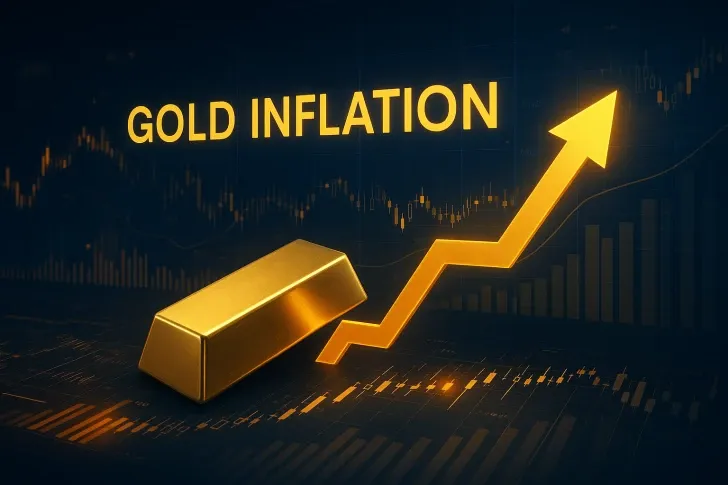
Gold prices have surged above $3,750 per ounce in recent trading sessions, driven by ongoing inflation concerns and market uncertainty. Investors have turned to the precious metal as a safe-haven asset amid strong U.S. economic data, persistent core inflation, and geopolitical tensions. Financial analysts note that the increase in gold prices reflects both traditional hedging strategies and a broader shift toward commodities amid currency market volatility.
Inflation as a Key Driver
Core Personal Consumption Expenditures (PCE) in the United States, the Federal Reserve’s preferred measure of inflation, rose by 0.3% in August, bringing the year-over-year figure to 2.9%. While inflation is moderating slightly, it remains above the Fed’s long-term target of 2%, sustaining investor concerns about potential long-term price pressures. Rising inflation expectations have historically driven demand for gold as a store of value, and current market dynamics are consistent with this pattern. Analysts emphasize that gold’s resilience is closely linked to central bank policies and global economic conditions, making it a critical indicator for traders and investors.
U.S. Dollar and Gold Relationship
The relationship between the U.S. dollar and gold prices remains a focal point for market participants. Despite the dollar’s strength amid robust economic data, gold has continued to attract investor interest. This indicates that demand for safe-haven assets persists even when the dollar remains firm. The inverse correlation between the dollar and gold is moderated by geopolitical uncertainty, inflationary expectations, and broader market sentiment. Traders are closely monitoring how these dynamics will influence short-term price movements and longer-term trends.
Central Bank Policies and Market Sentiment
Central bank policies, particularly from the Federal Reserve, have a significant impact on gold markets. While the Fed has maintained a cautiously accommodative stance, global central banks, including the European Central Bank and the Swiss National Bank, have adopted differing policies. The divergence in interest rates and monetary approaches contributes to uncertainty, encouraging investors to hedge with gold. Analysts suggest that any signals from central banks regarding rate adjustments, inflation targets, or quantitative easing measures will likely continue to influence gold prices.
Geopolitical and Global Market Influences
Gold prices are also responding to geopolitical risks and global economic uncertainty. Tensions in trade negotiations, regional conflicts, and market volatility have reinforced gold’s status as a safe-haven asset. Investors are diversifying portfolios to include commodities as a hedge against potential disruptions. Emerging markets with high dollar exposure, including Indonesia and Armenia, have further contributed to gold’s appeal, as currency pressures increase the perceived value of stable, tangible assets. Analysts note that these factors, combined with inflation concerns, create a robust environment for gold demand.
Investor Behavior and Market Trends
Market participants are displaying increased activity in gold futures, ETFs, and physical holdings. Retail and institutional investors alike are capitalizing on rising prices to adjust portfolios in anticipation of continued inflation pressures. Analysts observe that investor sentiment remains cautious but proactive, with many seeking to balance risk exposure across multiple asset classes. The increased demand for gold reflects both traditional safe-haven behavior and strategic positioning amid uncertainty in forex and equity markets.
Commodity Market Interactions
Gold prices are influenced not only by currency markets but also by broader commodity dynamics. Energy prices, including oil and natural gas, have shown moderate volatility, which affects production costs and inflation expectations. Base metals, such as copper and aluminum, also impact industrial and investment demand for commodities. Analysts suggest that the interplay of these factors contributes to gold’s attractiveness as a hedge against broader economic and market uncertainties.
Economic Outlook and Fed Policy
Looking ahead, economic indicators such as U.S. employment data, consumer sentiment, and industrial production will shape investor expectations. Analysts anticipate that while the Federal Reserve is unlikely to implement aggressive rate hikes, measured adjustments may be considered depending on inflation trends. Any shift in policy or communication regarding interest rates and liquidity measures is likely to influence both the dollar and gold prices. Market participants remain attentive to these developments, as they directly impact portfolio allocation strategies and risk management decisions.
Conclusion
Gold prices have surged above $3,750 per ounce due to persistent inflation concerns, safe-haven demand, and ongoing global uncertainty. The interplay of U.S. economic strength, core inflation readings, central bank policies, and geopolitical factors has reinforced gold’s appeal as a stable and reliable asset. Investors and policymakers alike are monitoring the situation closely, balancing risk exposure and strategic positioning in response to evolving market conditions. Gold’s performance continues to serve as a critical indicator of broader economic sentiment, reflecting both domestic and international influences in the current financial landscape.