Employment trends and rate expectations are shaping the dollar during the Fed’s first liftoff in a decade.
By Andreas Antonopoulos | Educator, Author of Mastering Bitcoin
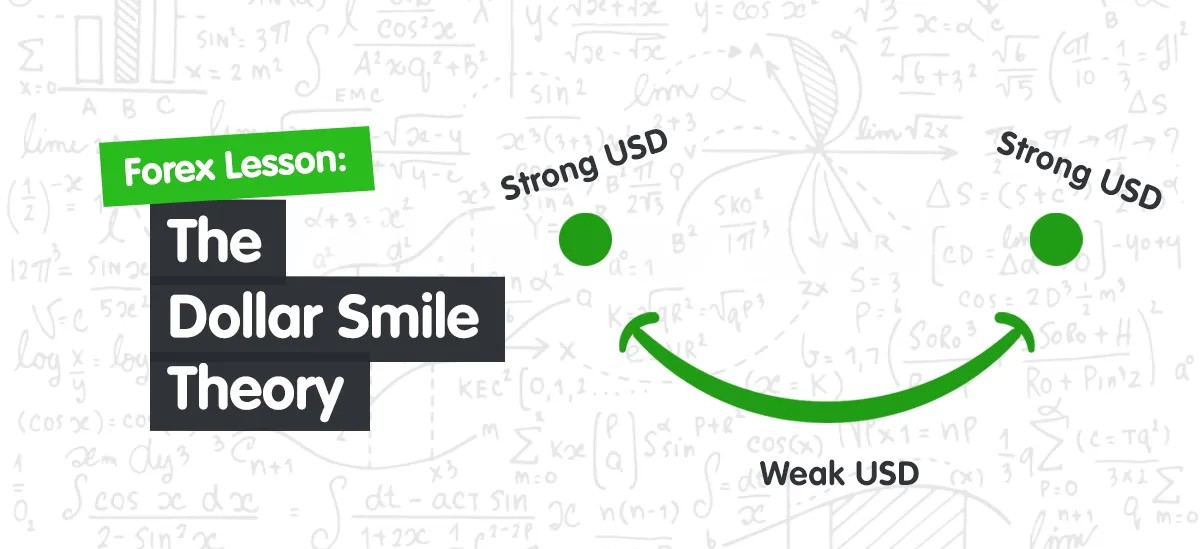
The “Dollar Smile” is one of the most enduring frameworks in foreign exchange markets, offering traders and economists a lens to understand why the U.S. dollar often strengthens under seemingly opposite conditions: moments of global distress, and periods of robust U.S. growth. What happens in the middle — when growth is mediocre and risks appear balanced — is where the dollar tends to lose ground.
Understanding the Smile
The theory, popularized by former Morgan Stanley strategist Stephen Jen, describes the dollar’s path as a curve resembling a smile. On the left side of the curve, global crises and risk aversion drive investors into the dollar as the ultimate safe-haven asset. On the right side, strong U.S. growth and attractive returns again support the currency. But in the center, when growth is sluggish and interest differentials narrow, the dollar weakens.
Over the past two decades, this framework has repeatedly played out across economic cycles. The Global Financial Crisis in 2008 saw investors rush into the dollar despite the U.S. economy being at the epicenter of the turmoil. A decade later, the Trump-era fiscal stimulus and strong labor market in 2018 fueled the dollar from the “right side” of the curve.
Real-World Examples
In 2020, the pandemic shock underscored the left-hand side of the Dollar Smile. Global investors scrambled for liquidity, and the Federal Reserve’s swap lines became critical to keeping offshore dollar markets functioning. DXY surged as funding stress peaked.
By mid-2021, as growth stabilized and central banks coordinated stimulus, the dollar weakened, slipping into the “middle” zone. However, the Federal Reserve’s aggressive tightening in 2022 quickly pulled the currency back to the right side of the curve, as higher yields and stronger growth expectations renewed its appeal.
Current Dynamics
In 2024, the dollar’s position appears less straightforward. Growth has moderated but remains positive, inflation is cooling, and the Fed is debating its next steps. Traders argue the dollar is hovering near the center of the curve, with risks tilted in both directions. A shock from geopolitics or financial instability could quickly propel it leftward, while a re-acceleration in U.S. growth would push it right.
For forex strategists, the key lies in recognizing when the market is transitioning between the three zones. Indicators such as global PMIs, volatility indices, and interest-rate differentials provide early clues as to which side of the smile the dollar might lean toward.
Takeaway for Traders
The Dollar Smile reminds investors that the U.S. dollar’s strength cannot be explained by interest-rate policy alone. Its dual role — as both a safe haven and a high-yield currency — ensures it thrives under extremes but falters when conditions look merely “average.”
As global markets brace for potential volatility in late 2024 and into 2025, the Dollar Smile remains as relevant as ever — a guide for positioning, risk management, and understanding why the dollar sometimes grins when others frown.