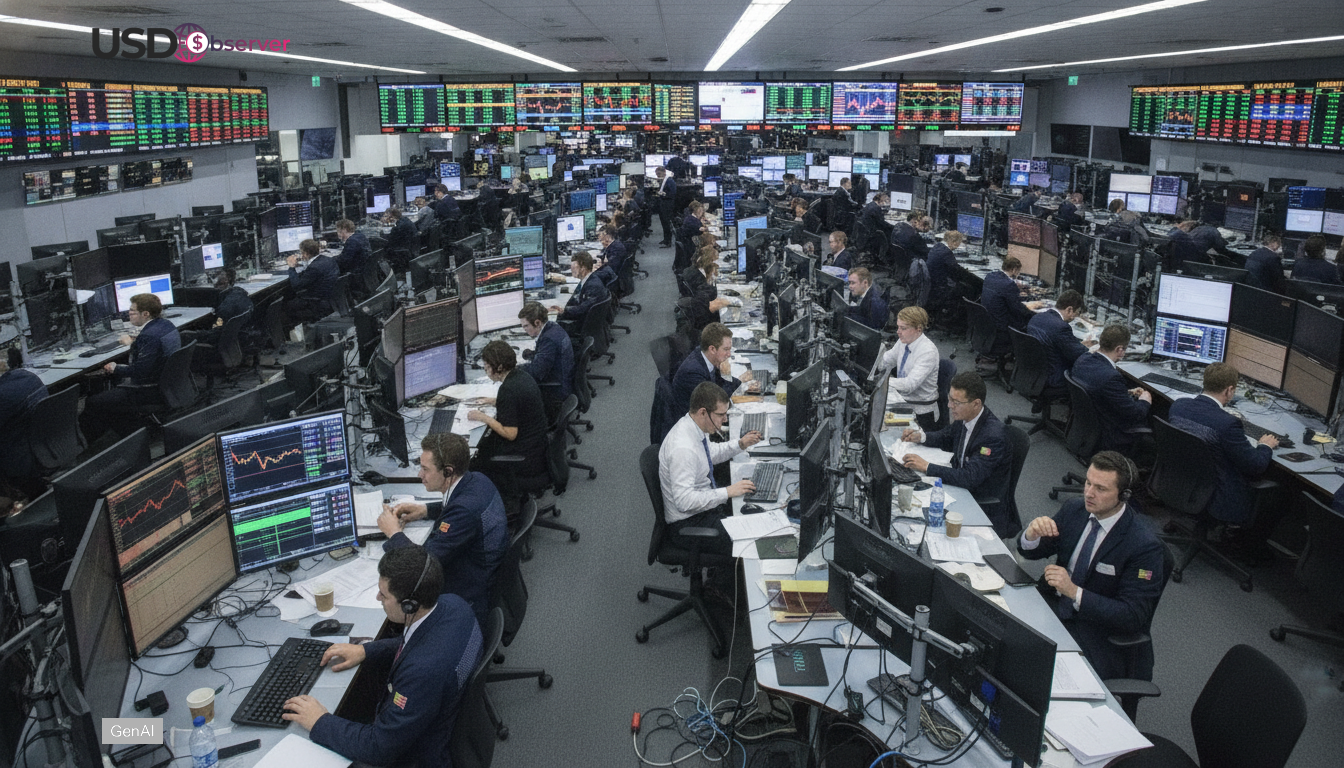
Dollar index volatility: what traders are watching
Dollar index volatility has been a notable feature of recent FX sessions, with wider intraday ranges and faster reversals across G10 pairs, according to market participants. Traders often point to stop runs and thinner liquidity around key data windows as positioning resets between sessions. In late July 2024, the dollar index was reported by traders to have posted repeated daily moves around or above 0.5% during US data releases, which can lift near-term hedge premia and make execution more sensitive to order flow. As reported by market participants, the moves appear driven more by cross-asset hedging and funding demand than any single headline. The practical takeaway is simple: when volatility rises, the dollar index can act as a real-time barometer of global risk and funding stress.
How the dollar index affects FX pricing and liquidity
Price action often clusters around option expiries and month-end rebalancing, when dealers adjust inventory and systematic funds update signals, as commonly noted by FX desks. In this backdrop, the dollar index is often used as shorthand for the risk budget because many portfolios rebalance through USD legs when realized volatility jumps. Settlement plumbing also matters, and dollar-linked liquidity has drawn attention in token markets alongside stablecoin flows; see Digital dollars drive stablecoin demand, IMF cautions, which traders cite when discussing cross-market funding. That dynamic can amplify moves when liquidity thins and spreads widen in major pairs, according to traders. When collateral calls, FX hedges, and funding needs hit together, the feedback loop can turn a modest spot move into a larger swing across correlated pairs, market participants say.
Key drivers behind dollar index swings
The drivers are more granular than a single macro story, with traders mapping rate expectations, term-premium shifts, and growth surprises into USD demand. For more on how policy expectations transmit into FX and credit, see How US Fed Policy Moves Rates, FX, and Global Credit, a lens traders use alongside Federal Reserve communication when officials tilt toward “higher for longer” or signal a clearer path to easing. Labor-market momentum can also reprice the curve quickly; US Job Market Decline Signals Cooling Hiring in July highlights how softer hiring signals can change the timing debate. Liquidity conditions, including dealer balance-sheet appetite around data releases, often determine whether a surprise becomes a trend or a fade, according to market participants.
Impacts on trade hedging and dollar priced commodities
Trade desks report that day-to-day hedging costs can rise when forwards and implied volatility reprice together, complicating procurement for importers and exporters. When DXY climbs quickly, dollar-invoiced commodities often face added headwinds because buyers outside the United States see higher local-currency costs, which can curb demand at the margin, as traders commonly argue. The index level also feeds into working-capital planning for energy and metals firms that borrow in dollars while selling into multiple currencies, according to corporate finance practitioners. Corporate treasurers often respond by shortening hedge tenors and widening hedge bands to manage mark-to-market swings. Depending on a firm’s margin structure and credit terms, a roughly 1% move in DXY is sometimes cited by market participants as enough to prompt near-term hedge-ratio adjustments, though thresholds vary widely by company.
Outlook scenarios for the dollar index
Forward pricing is increasingly sensitive to asymmetric risks, with markets reacting sharply to upside inflation surprises or downside growth shocks, as observed by investors. For a longer-horizon frame on rates, trade, and inflation sensitivities, see Global Economy Outlook: Rates, Trade, Inflation 2026, which is often referenced when framing scenario ranges into 2026. One near-term question is whether realized volatility mean-reverts as the data calendar clears, or whether liquidity shocks persist around event risk. Broader conditions matter too: a strong USD can tighten global financial conditions for borrowers with dollar liabilities, which can feed back into demand and capital flows, as widely discussed in macro research. Traders will watch whether realized volatility converges toward implied levels, because that often influences whether hedgers pay up or step back. If volatility fades, the reflexive bid for dollars can ease; if it stays elevated, the dollar index may remain supported by defensive positioning, according to market participants.