USD strength analysis and today’s dollar drivers
Analyzing USD strength is important because a firmer dollar can change how trade is priced, financed, and settled across borders. Much of the move is often linked to interest rate differentials, where higher U.S. yields can increase the cost of holding and hedging non-USD exposure. As of June 2024, the Federal Reserve held the federal funds target range at 5.25% to 5.50%, according to the Federal Reserve’s published policy communications at the time. Traders often monitor the dollar index for a fast read on broad USD pressure, then translate it into landed costs, hedging spreads, and invoice currency terms for importers and exporters.
According to available reports from the source context, the US Central Bank influence on stablecoin regulation suggests that dollar-linked mechanisms can transmit policy choices outside the U.S., and compliance signals in payment corridors are highlighted by a BBC report, Wise under investigation over money laundering control concerns, which shows how scrutiny can intensify as monitoring requirements change.
How USD strength changes trade pricing and settlement
The first impact is mechanical: when contracts are priced in dollars, non-U.S. buyers must deliver more local currency for the same shipment as USD rises. That effect can show up quickly in energy, freight, and intermediate goods because payment cycles are often short and working capital needs are immediate. Platform commerce can feel it too, since higher USD funding costs may raise inventory finance and cross-border ad spend. A deeper understanding of these dynamics is crucial for stakeholders navigating a changing financial landscape.
FX market reactions and hedging costs
In forex markets, USD strength does not hit every currency equally. Sensitivity can depend on external debt levels, commodity import dependence, and whether local inflation expectations are credibly anchored, as commonly described in macro research and central bank commentary. When the dollar is strong, offshore funding can tighten and option implied volatility can rise, pushing hedging premia higher for firms with short USD balance sheets. The dollar index is treated by market participants as a cross-asset stress gauge because correlations can compress when USD liquidity is scarce.
Commodities, imports, and USD liquidity spillovers
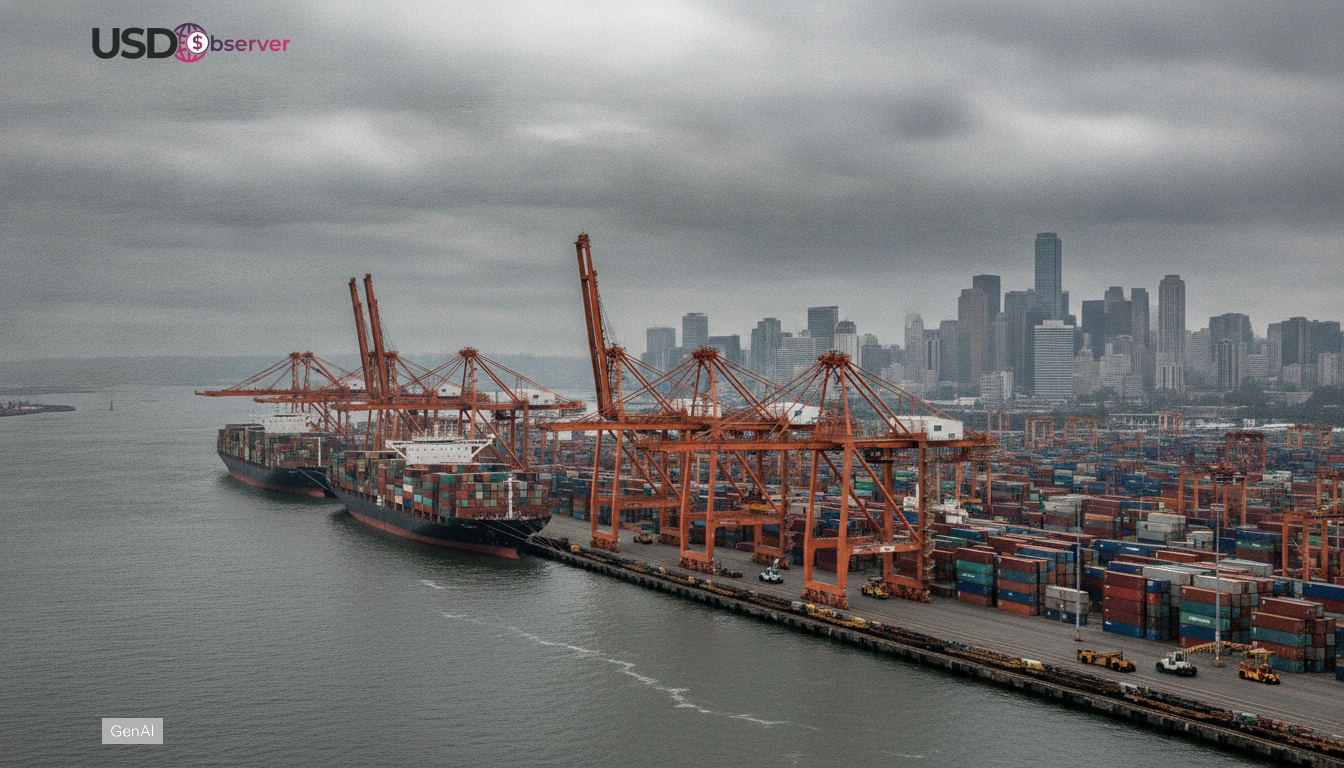
Commodity channels are significant because many global benchmarks are dollar-denominated, so a stronger USD can cool demand even if supply is stable, frequently noted in market commentary. Import-dependent economies can see higher local currency fuel and input costs, which filter into freight rates, food prices, and manufacturing margins, as seen in recent shipping and energy price volatility. Businesses might adjust order timing, inventory buffers, or supplier terms rather than changing shelf prices immediately, altering shipping volumes and cash conversion cycles.
What to watch next for USD and cross-border trade
Forward planning increasingly uses scenarios rather than point forecasts, since USD direction depends on growth differentials, inflation persistence, and how central banks respond to labor and price data. Key items to watch include the path of U.S. real yields, the dollar index trend, and whether global risk sentiment is tightening or easing funding conditions, with upcoming CPI and payroll releases often acting as catalysts. In 2025 planning, firms may need to translate USD strength analysis into strategic decisions regarding invoice currency mix and hedge tenors.