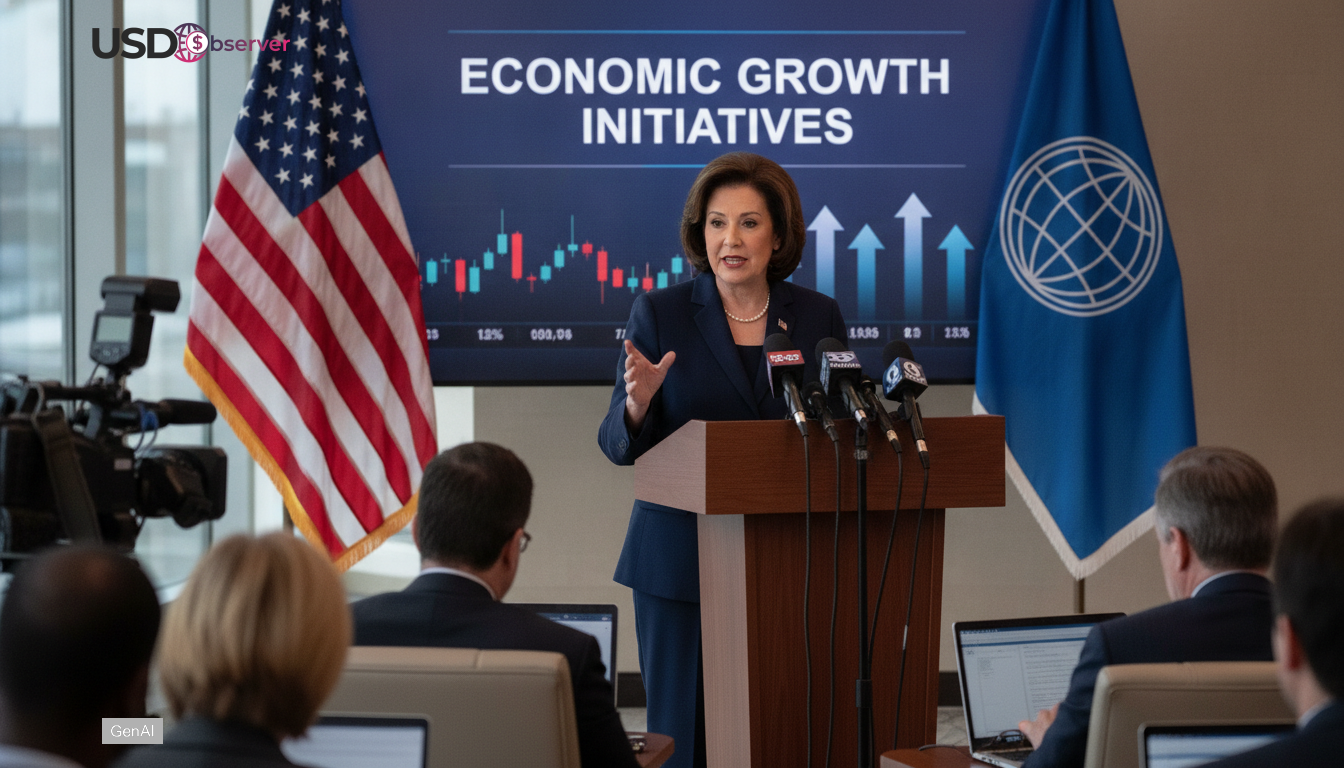
US Economic Growth Drives Dollar Strength
The markets opened today with US rates and growth expectations firmly in command, influencing price action. Traders are keenly focused on how US demand continues to absorb elevated borrowing costs, bolstering signals of robust hiring and spending. In this context, USD strength remains pivotal. The prevailing tone reflects relative performance, with surprising US data maintaining tighter policy expectations compared to competitors. This divergence is evident in live futures market pricing, where investors demand greater yields for holding other major currencies. According to an update from FOREX.com, this trend exemplifies economic exceptionalism, and the narrative has been consistent throughout the trading session. Positioning has responded accordingly, favoring the dollar across both G10 and selected emerging market pairs.
Impact on EUR/USD and USD/JPY Currency Pairs
The most pronounced movements are occurring in the EUR/USD and USD/JPY pairs, where fluctuations in rate differentials are particularly impactful. Euro dips today coincided with US yield increases, tightening financial conditions in Europe via the exchange rate channel. In Japan, trading remains sensitive to shifts in US Treasury momentum since these directly affect the economics of dollar purchasing. Additionally, a recent BBC report on Shell’s profit surge linked to the Iran conflict has kept energy and inflation considerations front of mind. Updates from macro desks emphasize the importance of yield spreads over fleeting headlines.
Factors Contributing to Economic Exceptionalism
This divergence in performance isn’t merely a fleeting data point; it represents a sequence of resilient outcomes in consumption, labor demand, and credit conditions. During live trading, asset signals such as xau usd prices have also captured attention, as rising real yields tend to exert downward pressure on gold while supporting dollar strength. The narrative around tokenized finance, highlighted in Ethereum’s $8B Tokenized Treasuries Onchain, illustrates how demand for Treasury exposure can shift through new avenues without diminishing the underlying demand for dollars. In crypto, the ups and downs in eth usd prices and funding rates remain relevant to risk sentiment, even as the primary driver continues to be US macro outperformance. This dynamic has escalated as global investors seek liquid dollar assets amidst rising volatility.
Potential Long-term Effects on Forex Markets
If exceptionalism continues, the most significant repercussion could be a tighter global financial impulse cascading through exchange rates and dollar funding markets. This shift can modify hedging costs for corporations and affect the velocity of capital flows into higher-yield regions, particularly during London and New York trading hours. Portfolio managers are discussing how a strong dollar may reduce imported inflation for the US while increasing it elsewhere, complicating central bank strategies. Live correlations among equities, credit, and FX are evolving, with the dollar behaving less like a straightforward safe haven and more like a carry vehicle amid steady US growth. An update regarding how oil prices are affected by the Iran deal chatter demonstrates how energy fluctuations can temporarily relieve pressure on importers, yet a persistent dollar demand is likely to resurface when US yields reassert themselves. Ongoing updates will probably keep a focus on funding conditions and cross-border dollar liquidity.
Comparative Analysis with Global Currencies
In comparison to global peers, the dollar has gained from a clearer growth premium relative to Europe and a yield advantage over Japan. Meanwhile, some commodity currencies find themselves in a tug-of-war between risk appetite and terms of trade. Traders are also monitoring solana price usd as an indicator of speculative demand, recognizing that bursts of risk-on sentiment can temporarily weaken the dollar, despite strong US data. However, FX desks have noted today that rallies in high-beta assets haven’t consistently undermined the dollar, suggesting that capital remains focused on US return prospects. Market commentary emphasizes that relative policy credibility is just as crucial as nominal rates, especially with inflation risks looming on both sides. An important update to monitor is whether non-US data can begin closing the surprise gap, as only a sustained improvement abroad tends to challenge current dollar dominance.