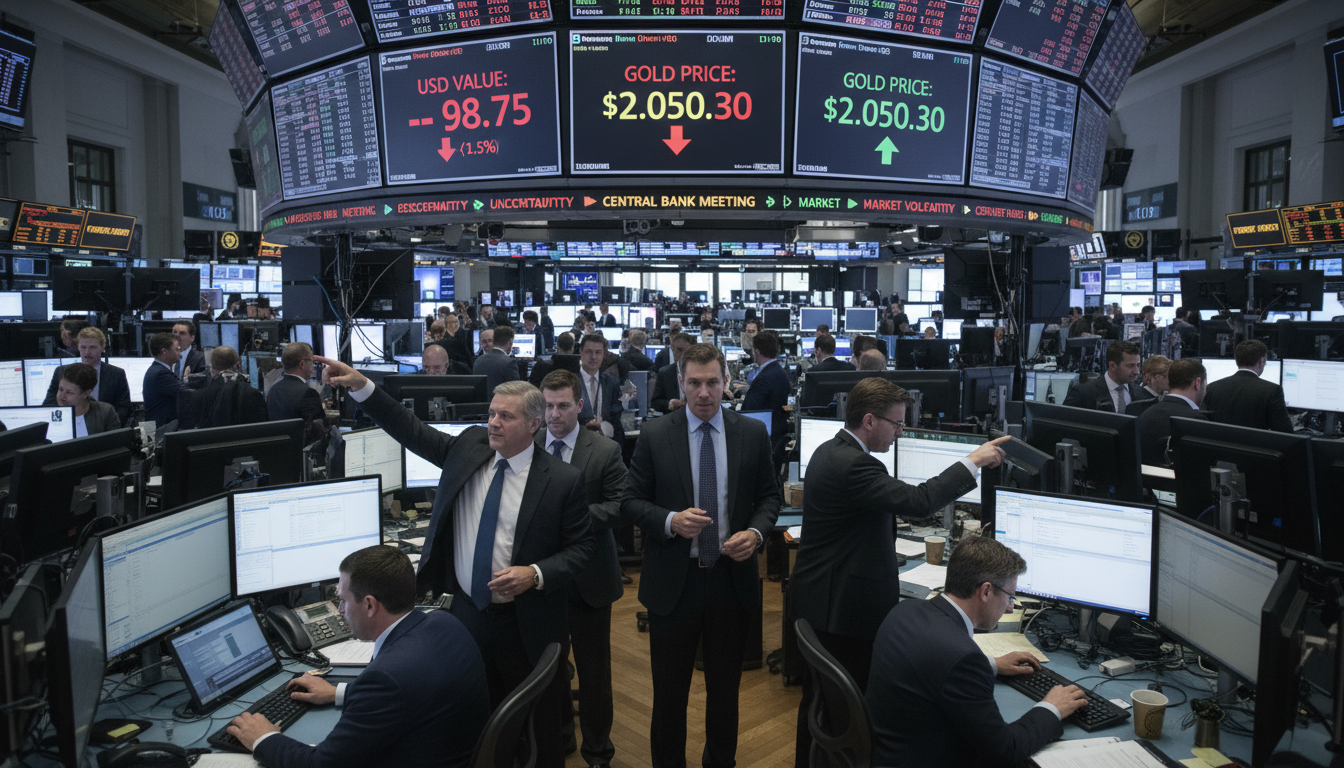
Fed’s Unexpected Rate Check Leads to USD Drop
The Fed rate check landed like a surprise audit of market assumptions, and currency desks treated it as a signal that interest rates could stay restrictive longer than implied. That shift hit fast in spot pricing as the U.S. dollar slid across major pairs, with liquidity thinning and stops compounding the move. Traders framed the episode as a credibility test rather than a routine communication, with rate path probabilities repriced in minutes and hedges reset into the close. Today, the biggest takeaway is not a single headline, but the speed at which dollar confidence can fade when policy messaging reads as uneven. Live pricing reflected that uncertainty, and the reaction function became the trade.
Gold as a Safe Haven Investment Option
As the U.S. dollar weakened, gold investment flows showed a classic risk control response, shifting from tactical exposure to more defensive positioning. The move did not hinge on fear alone, it reflected portfolio math as real yield expectations moved and the cost of holding non yielding assets looked less punitive. In that rotation, gold outperformed other havens because it offered both crisis insurance and a hedge against communication risk around interest rates. A separate stream of market scrutiny has also highlighted how quickly liquidity narratives can flip in adjacent corners of finance, as seen in coverage of the FDIC plan under the GENIUS Act, reinforcing why investors prized assets they can exit cleanly. Update expectations then became centered on risk limits, not return targets.
Implications for Future Fed Policies
The unusual rate check matters because it alters how traders interpret the Fed’s threshold for acting, especially when inflation progress is uneven and growth data refuses to cooperate. Instead of looking only at the next meeting, desks started mapping the sequence of conditions that would justify cuts, and what would delay them. That is where interest rates expectations became more fragile, with forward guidance treated as conditional rather than directional. Today, the policy implication is that future messaging may need to do more work to keep financial conditions aligned with the committee’s intent. A Live focus on press conference phrasing, dots, and balance sheet nuance now carries greater weight than a single statement line, because the market is primed to punish ambiguity.
Market Reactions Across Forex and Commodities
In forex, the repricing hit the high beta complex first, then spread into broader G10 as volatility sellers stepped back. The U.S. dollar leg of cross trades became the pressure point, with intraday correlations tightening and short term implied vol bid into the event window. Commodities reacted on a different channel, with gold tracking the rates narrative while industrial metals and energy responded more to growth sensitivity and positioning. For context on how quickly macro shocks can cascade through commodities, Goldman Sachs commentary on copper risk tied to geopolitics illustrates why hedgers watch more than just the Fed. Update chatter on options desks stayed focused on convexity, not directional conviction.
Long-term Outlook for USD Stability
The longer run question is whether this was a one off shock or a reminder that USD stability is earned through consistent reaction functions. If investors believe the Fed will use unusual checks to lean on conditions, the currency can face episodic drawdowns even without a clear deterioration in U.S. fundamentals. That does not mean a structural collapse, it means higher sensitivity to incremental information and a higher bar for clarity. Positioning data and reserve manager behavior will matter as much as rate differentials, because confidence can amplify or mute the impact of any interest rates surprise. A disciplined reading of the cross asset tape, including Fortune’s market reporting, keeps the episode in context as a credibility event. Live risk management, not slogans, will define the next phase.